ACE Inhibitory Peptide Database

ACEIP-DB v1.0 — Last updated: 2026-04-18

ACEIP-DB is an open-access, manually curated database dedicated to angiotensin-converting enzyme (ACE, EC 3.4.15.1) inhibitory peptides. It provides comprehensive annotations including sequences, physicochemical properties, IC₅₀ values, biological sources, and literature references for antihypertensive peptide research.

📊
Total Entries
🧪
With IC₅₀
🌿
Source Types
📏
2–50 aa
Length Range
Browse by Source
About ACEIP-DB

ACEIP-DB (ACE Inhibitory Peptide Database) is a comprehensive, manually curated resource for angiotensin-converting enzyme inhibitory peptides. The database currently contains 1,193 validated entries covering peptide sequences ranging from 2 to 50 amino acids, sourced from diverse biological origins including milk, fish, cereals, plants, and synthetic constructs.

Each entry is annotated with sequence information, IC₅₀ values (when available), physicochemical properties (molecular weight, isoelectric point, net charge, GRAVY index, instability index, hydrophobicity, Boman index), 3D structures, SMILES notation, detailed source information, and literature references with DOI and PubMed links.

News & Updates
➤ Apr 27, 2026
Added 3D PDB structures (973 peptides) with interactive 3Dmol.js viewer for rotation, zoom and translation.
➤ Apr 27, 2026
Integrated SMILES encoding for all 1,193 entries (773 from PubChem, 389 predicted by RDKit) with PubChem CID cross-references.
➤ Apr 22, 2026
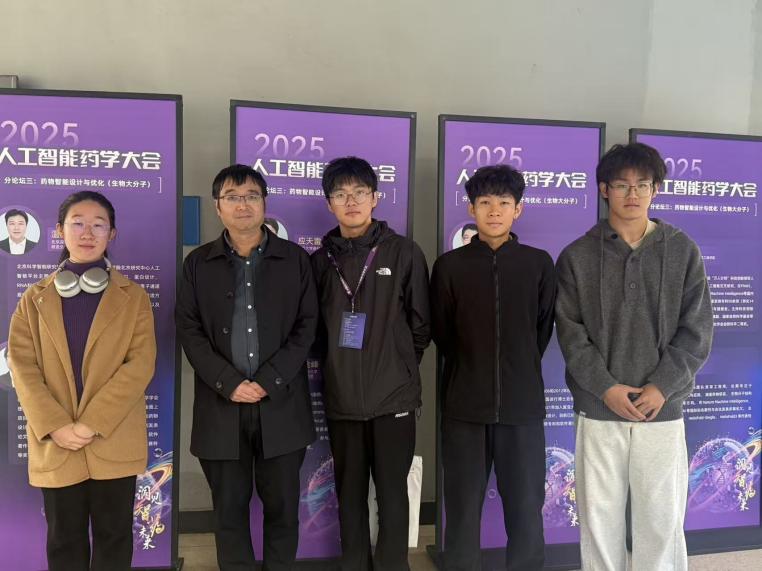
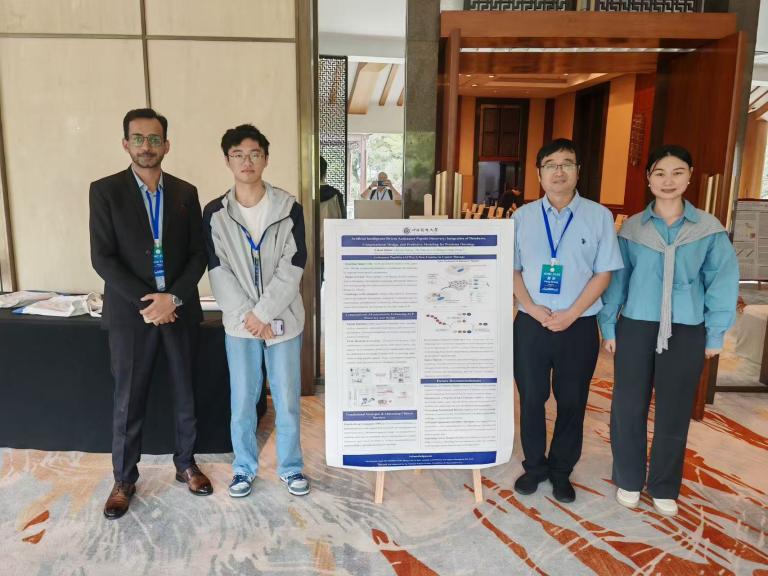
Team page launched with faculty advisor profiles, project member introductions, and group photo gallery.
➤ Apr 19, 2026
ACEIP-DB v1.0 officially deployed with 1,193 validated entries.
➤ Mar 2026
Physicochemical properties (MW, pI, GRAVY, instability, Boman index, hydrophobicity) calculated for all entries.
➤ Feb 2026
IC₅₀ data curated from literature sources; DOI and PubMed references linked.
➤ Jan 2026
Data collection initiated from PubMed, food science journals, and existing peptide databases.
About Us

The database is developed by Prof.Zheng's team. This is the home page of the database, please use the navigation bar in the top of page to browse the database. If you encounter any problems in using this database, you can consult the Help pages for help or send an email in contact to us, we will help you solve as soon as possible.

Meet our team →

Commitment:

We are responsible for maintaining the website daily and updating the database regularly. The updated information will be written in the Help page. Last updated on 2026-04-27.

opens since Apr 27 2026.
Citation

If you use ACEIP-DB in your research, please cite:

Author et al. ACEIP-DB: A comprehensive database of ACE inhibitory peptides. Journal Name, 2026.
Related Resources
BIOPEP-UWM — Bioactive peptides
PubMed — Literature search
UniProt — Protein sequences
PDB — Protein structures
DRAMP — Antimicrobial peptides

Advanced Search

Filter Criteria
🔍

Set your filter criteria and click "Search" to find peptides.

Browse All Entries

Loading data...

Entry: ...

Database Statistics

Loading statistics...

Downloads

Download Datasets
DatasetFormatDescriptionAction
Full DatabaseCSVAll entries with complete annotations ⬇ Download
Sequences OnlyFASTAPeptide sequences in FASTA format ⬇ Download
Full DatabaseJSONAll entries in JSON format (for developers) ⬇ Download
Terms of Use

ACEIP-DB is freely available for academic and non-commercial research. If you use data from ACEIP-DB, please cite the original database publication and the relevant literature for individual entries. Redistribution of the complete dataset requires prior written permission.

Our Team

Our research at CPU develops machine learning methods for predicting ACE inhibitory peptide activity and translates them to clinical practice. Our overarching goal is to offer each patient the right intervention (e.g. decreasing side effect) at the right time according to their individual risks and preferences. Our group is under Prof.Zheng's guidance and supervision.Prof.Cao also provides guidance and assistance for the wet-lab experiment section.
Faculty Advisors
Prof. Heng Zheng
Heng Zheng
Professor of Pharmaceutical Sciences
Heng Zheng, Professor of Pharmaceutical Sciences, work in Biomedicine Technology Transfer of Technology Transfer Platform; Nanjing University National Demonstration Base for Innovation and Entrepreneurship; School of Life Science and Technology, CPU; Institute of Medical and Pharmaceutical Biotechnology, Jiangsu Industrial Technology Research Institutegy. Prof. Zheng received his Ph.D in 2000, in microbial and biochemical pharmacy, CPU, under the supervision of Prof. Wutong Wu. In 2005-2007, he finished a postdoctoral work at School of Pharmaceutical Sciences, Nagasaki University, Japan. Prof. Zheng's research focuses on the research and development of antimicrobial drugs, especially on the antimicrobial peptides. He is an expert in the field of computer aided drug design, discovered several novel metallo-β-lactamase inhibitors, which searched as potential drug candidates for multiple-drug-resistant bacteria. He is also specialize in protein structure prediction, molecular docking, and molecular dynamics. He published more than 80 papers, obtained 3 Chinese invention patents in recent years.

Cao Lijuan
Cao Lijuan
Ph.D., Researcher, Doctoral Supervisor
Cao Lijuan, Ph.D., Researcher, Doctoral Supervisor. She is a young key talent at the National Key Laboratory of Multi-Target Natural Medicines, a provincial distinguished young scholar, a recipient of the provincial “333 Project” three-tier talent training program, and Vice President of the Institute of Original Drug Research. Her research focuses on the study of metabolism-immune interaction regulatory mechanisms and novel target discovery, as well as the pharmacological mechanisms of natural medicines in metabolic diseases. She has led six projects including the General Program of the National Natural Science Foundation of China, sub-projects of major new drug creation, and sub-tasks of key R&D programs. Representative achievements have been published in journals such as Nat Commun, Cell Metab, Cell Reports, with over 30 SCI papers published and 5 authorized invention patents. She has also received the First Prize of Jiangsu Province Science and Technology Award (as the third contributor).
Project Members

Zhangheng Qian
Zhangheng Qian
School of life and science, undergraduate student, ACE project team leader
He is interested in artificial intelligence-assisted Drug Design, focus on building the ACEiP database and using machine learning or deep learning methods to predict peptide activity. His work has been presented at international conferences APBC.

Yunuo Zhou
Yunuo Zhou
Undergraduate, School of Life Science and Technology
She is an undergraduate student from the School of Life Science and Technology. Her research interests focus on artificial intelligence-aided drug design and biosynthesis. Currently, she serves as the second person in charge of the ACE inhibitory peptide research group

Maryam Nawaz
Maryam Nawaz
Final-year MSc candidate in Biology, Zheng's lab
A final-year MSc candidate in Biology, working in Zheng's lab. Her research focuses on computational biology and computer-aided drug design, particularly antimicrobial and antiviral peptides. She has experience in machine learning–based prediction models, peptide database curation (including DRAVP 2.0), and experimental validation. She is skilled in Python-based bioinformatics, deep learning, and molecular modeling. Her work has contributed to publications in Journal of Molecular Biology, Molecular Diversity, and Nucleic Acids Research, and has been presented at international conferences including Nature conferences and APBC.

Lelei Xiao
Lelei Xiao
School of Life Sciences, undergraduate student, a member of the ACE project team
Involved in the development and organization of the project's database. She is interested in the intersection of data science and the life sciences, with a focus on biostatistics and AI-assisted drug design, particularly in applying quantitative methods to understand biological systems and support data-driven research.

Yunzhe Xu
Yunzhe Xu
School of Life and Science, undergraduate student, member of ACE project team
He is interested in interdisciplinary study of pharmacology and bioinformatics

Shipeng Li
Shipeng Li
School of life and science, undergraduate student
He works as a team member of the ACE project.

Jiangcheng Gao
Jiangcheng Gao
School of life and science, undergraduate student, ACE project team member
He is interested in artificial intelligence-assisted Drug Design.

Qijun Song
Qijun Song
School of life and science, undergraduate student, ACE project team member
Mainly work on data verification and structure(.pdb) collection.

Yang Hong
Yang Hong
School of Life and Science, undergraduate student
Drawing on prior experience across internships and project participation, she aims to bring organized workflows and clear communication to the team.

Ruotong Lin
Ruotong Lin
State Key Laboratory of Natural Medicines, graduate student
Assist with the project

Help & FAQ

Getting Started

Simple Search: Use the search bar to find entries by ACEIP ID, peptide sequence, or biological source.

Advanced Search: Combine multiple filters — ID, sequence, length, source, molecular weight, pI, charge, GRAVY, instability, Boman index, DOI, and PubMed ID.

Browse: View all entries in a sortable, paginated table. Click any entry to see full details.

Downloads: Export the complete dataset in CSV, FASTA, or JSON format.

Data Fields

ACEIP ID: Unique identifier (aceip0001–aceip1193)

Sequence: Amino acid sequence in one-letter code

IC₅₀: Half-maximal inhibitory concentration for ACE

MW: Molecular weight in Daltons

pI: Isoelectric point

GRAVY: Grand average of hydropathicity

Boman Index: Protein-binding potential

Instability: In-vivo instability prediction

Frequently Asked Questions

How is IC₅₀ data collected?

IC₅₀ values are manually curated from peer-reviewed literature. Values are reported as published, with original units preserved (μM, mM, mg/ml, etc.).

What physicochemical tools were used?

Properties were calculated using established peptide analysis algorithms for MW, pI, GRAVY, instability index, and secondary structure prediction.

Can I submit new peptide data?

Yes! Use the Submit page or email your data directly. We accept new ACE inhibitory peptide data with supporting literature references.

Submit Data

Contribute to ACEIP-DB

We welcome contributions of new ACE inhibitory peptide data. To submit entries, please provide at minimum the peptide sequence, IC₅₀ value, source, and a supporting reference.

Please send your data via email to: qianzh@stu.cpu.edu.cn

Required information per entry: Peptide Sequence, IC₅₀ Value (if available), Biological Source, Reference Title, DOI or PubMed ID.